

Japan’s currency and bond volatility signal growing liquidity stress that could impact U.S. stocks, bonds, and crypto markets.
Sectors & Industries
November 24, 2025


Table of Contents
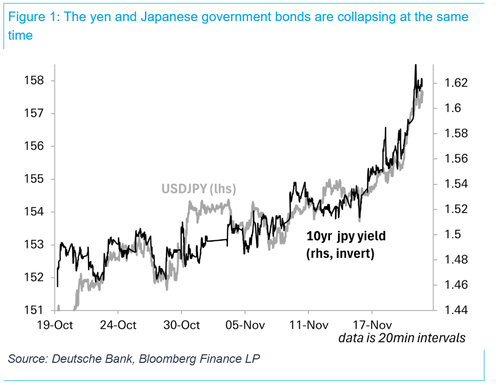
One major theme this week came from abroad: Japan’s bond market and currency weakening at the same time, something that historically happens only under deep macro stress.
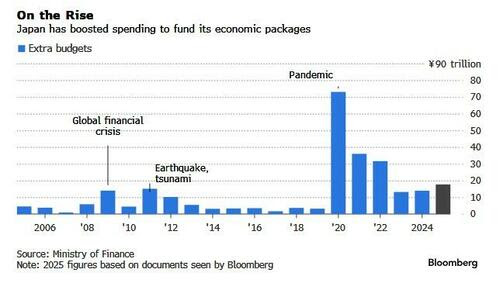
Long-dated Japanese government bonds are on track for their worst year since the 1970s, while the yen hovers near multi-decade lows. Analysts warn that the combination of heavy fiscal stimulus, deeply negative real rates, and a fragile bond market could create a situation where policymakers are forced into abrupt moves.
Why does this matter for U.S. markets?
Because when Japan moves sharply, it affects global liquidity. Japanese funds are major investors in U.S. bonds and credit, holding roughly $3.62 trillion. If their domestic markets destabilize further, the global “carry” structure that has supported risk assets could unwind at the margins. It’s not a crisis today — but it’s a new pressure point investors have to monitor.
Japan moved back to center-stage this week — and for good reason. The combination of a weakening yen, rising Japanese bond yields, and a wave of highly leveraged retail currency trades has started to create the same pressure that triggered last year’s global selloff.
To understand why this matters, it helps to look at Japan’s role in the financial system.
For decades, Japan made it possible for global investors to borrow yen at extremely low interest rates — often near zero — and use that money to buy higher-yielding assets abroad. This is the classic yen carry trade, and it has been one of the largest sources of global liquidity over the past 25 years.
Here’s what the trade looks like in simple terms:
Because Japan kept rates near zero for so long — and even went negative for years — the world built up hundreds of billions of dollars of positions funded in yen. Many estimates put the size of the yen-funded global carry structure at $500 billion or more, spanning everything from Nasdaq exposure to EM bonds and crypto derivatives.
That cheap yen acted like a liquidity pump.
When the yen weakened, global money flowed into risk assets.
When the yen strengthened suddenly, the trades unwound — and markets fell.
Three separate developments are now squeezing that valve:
This is exactly the setup that causes trouble:
– a fragile currency,
– a stressed bond market,
– and heavy leverage sitting on top of both.
If Japan intervenes or signals a policy shift, the yen could snap higher. A sudden yen spike is the number one killer of carry trades because it forces investors to sell foreign assets quickly to cover losses at home.
Join LevelFields now to be the first to know about events that affect stock prices and uncover unique investment opportunities. Choose from events, view price reactions, and set event alerts with our AI-powered platform. Don't miss out on daily opportunities from 6,300 companies monitored 24/7. Act on facts, not opinions, and let LevelFields help you become a better investor.

AI scans for events proven to impact stock prices, so you don't have to.
LEARN MORE